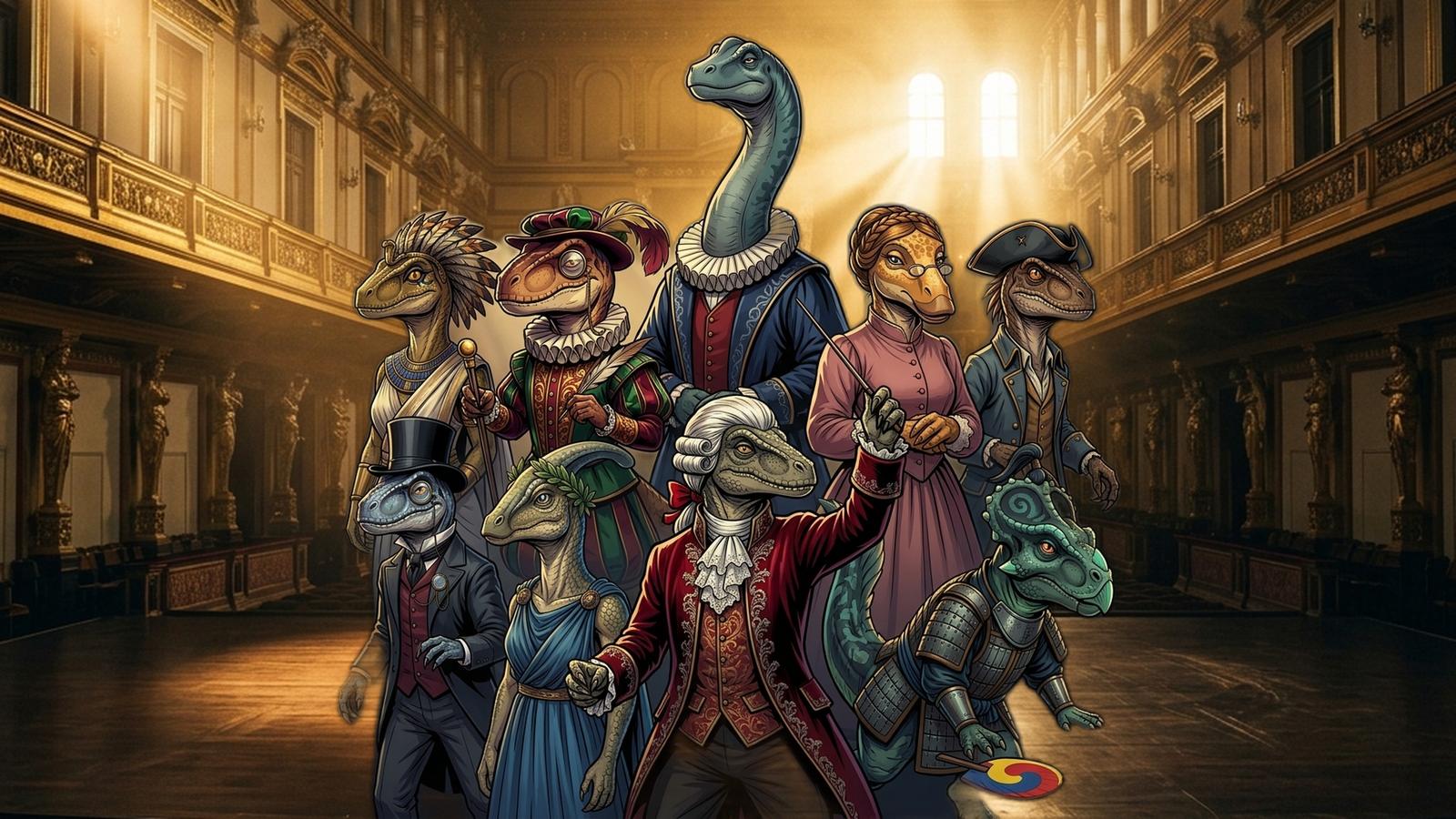
We're using the factory to build the factory. First, we built and refined each agent (aka Designosaur) to do its job, like tuning each robotic system on a modern physical automobile factory. The first apps went through its steps, at first largely by hand (like trundling each part of the car from machine to machine), then adding more internal automation, building from the inside steps out. Each correction became learning for the next cycle. Cycle times are getting faster. Here's how it worked to create Podium, and the Conductor's Office, and here's how we're using it to create a fitness app.
In the software world, the concept of "Eating your own dogfood", or for the fancy people "Drinking your own Champagne", is the idea that you become your own first customer. Here's how we did it.
Podium, Our Business and Factory Visualization Dashboards
We built Podium to give leadership a daily view of progress, stalled work, decisions and spending. I approved the design on September 7th, 2026, after eight rounds of review on working pages. We then built each page to that design and added the numbers after its tests passed. We continue to refine the application as we use it each day.
The Conductor's Office
Where I sort mail and keep track of people.
The office sorts my mail and texts, identifies replies and events, and separates spam while keeping track of the people involved. As of September 23rd, 2026, it has classified 103,950 emails and read 33,545 texts. Of those emails, 5,480 were classified in the last thirty days. It has raised 240 suggested events, seven approved onto the calendar and twenty-five turned down, and caught 6,349 spam messages. Each approval or refusal becomes a rule for the next pass, so the suggestions get more relevant with use. The next step is designed: approved events reaching the family's Skylight calendar.
SwabbieFit
A fitness app for a partner.
We built the fitness app from the partner’s requirements under the same development rules as our own applications. On September 5th, 2026, we chose to build its first screens by hand instead of waiting for automated development. Those screens set the standard against which we assess automatically built screens. The phone and browser share one scoring engine, three switchable themes, and the release process used for our own work.
On September 17th the app ran end to end on a simulated phone. We fixed all four build defects in the next weekly cycle and added a demo mode and a live privacy page. A person still needs to arrange store accounts and install the build on a physical phone. The next app starts with a shell for all three platforms, three themes and the release steps from the first app.
The Safeguards
The safeguards run on every build. The machine tests everything it can test; where it cannot tell, two independent systems compare answers. Where taste decides, a real, live human being decides what looks and feels right, and that decision is written down as a rule for the next build. Nothing reaches production except through three stages, each with its record kept; seven releases took that path between September 8th and September 14th, 2026. Every screen ships with three themes. Anything about a real person or company is proposed by the machine and confirmed by a person. Each cycle widens what the machine can test on its own.
What We Deliver
iPhone, Android and the Web
Your app is designed once and behaves like a native app on each of the three. Today that is the web and the iPhone simulator; the store versions come next.
A Record of Every Test and Every Release
You can see what was tested and who approved it. We test and run every screen before accepting it for release. Each production release records the review and the person who approved it.
Your Judgment Stays in the Loop
When the machine cannot tell whether something is good, it stops and asks a person. What it should look like, what it should do and whether it should exist at all are never decided by a machine.
Your Clients and Relationships
Your clients and your relationships stay yours. We never train on your material unless you choose it, and then only on patterns you can see and take back. We never scrape, and we never contact anyone on your behalf. Partners keep their brand, their taste and their client; your notes go straight into the work and come back answered.
We built this app from a partner’s requirements to score a fitness cycle from tape measurements. Every number stays on the device, and one scoring module gives the same result in a browser and on an iPhone. We tested the complete app on an iPhone simulator on September 17th, 2026.
Fitness calculator · browserPractice history · browser
A Proposed App in Parklife Communications' Colors and Type
We proposed an app from one visit to the public website of Parklife Communications, a marketing and branding strategy firm. Shown with its permission, the proposal presents a client booking experience at laptop and phone widths. You can inspect the colors, type, spacing and corners taken from the public site.
Laptop home: Come in. A first conversation about what you want to make next. Let's talk. Thursday at 10:00, Friday at 2:00, and Tuesday at 11:00.Phone home: the same screen, stacked, with Let's talk full width and the same three times.
We use Podium each morning to review operations on production data and manage mail and contacts in the Conductor's Office. The screenshots below show the numbers recorded during those dated reviews.
Podium Overview · morning boardBusiness plan · milestones
On September 22nd, 2026 the overview board counts 128 changes accepted and 3 releases from September 15th to September 22nd, with 4 plan reviews waiting on me.
On September 23rd, 2026 at 10:35 AM CDT the plan page lists 5 milestones, none met yet, with the first due by November 1st, 2026.
Conductor's Office · mail · masked records
Click an email and its dossier opensInbox · people · masked records
Mail and tasks stay in the Conductor's Office with masked records on the public site.
People and organizations stay in the inbox directory with masked records on the public site.
Sample records, not real mail: this is the same screen we use on our own inbox, shown here with made-up senders.
Your Partner Page
Each partner has a page showing working features, planned work and a place to leave notes. We handle those notes alongside our own work and report the result on the partner’s page.
Every screen is built to a strict standard, tested and run before anyone calls it done. When the machine cannot decide whether something is good, it stops and asks a person instead of guessing.
One Effort, Three Platforms
We design for native behavior on iPhone, Android and the web, using one design and one set of rules.
The first app, built by hand on these rules, runs on the web and an iPhone simulator. Automatically building its screens comes next.
Trio Themes You Can Switch Between
Every app ships with three themes that differ in type, spacing, shape, depth, motion, layout and icons. Users choose their theme, just as the buttons above let you change this page. The library holds 36 themes.
Your Relationships Stay Yours
Our commitments to partners: No training on your material unless you choose it, and then only abstracted patterns you can see and revoke. No scraping, no contact made on anyone's behalf. Every person in our records is one a person confirmed; the machine proposes, never asserts.
Who We Work With
Design Studios and Small Agencies
You keep the brand, the taste, the curation and the client. We establish the client’s requirements through conversation and show the application as we build it. We handle development, testing, release and accessibility across the three platforms. You decide what looks and feels right, including decisions the system cannot make.
Partners with a Product and a Market
You bring the requirements and the people who will use the application. We build it, keep information on the device where required, and revise it each week from your notes.
If we already work together, you have your own page. To talk about a new project, write to us.
Run our business through Podium for a full week and write up the results, planned for September 27th, 2026.
The fitness app on real phones once the developer account opens.
Next
The first app in the App Store and Play Store under C-Level Sales Guy LLC.
A studio's first real client screen built from its files, not around them.
Later
A production system for volunteer community theatres: the plan is written; building it comes later.
The Designosaurs™
Nine named roles cover security, privacy, ethics, efficiency, release and the business case for your application.
The Designosaurs work behind the scenes today; two operating modes and a parent-and-child teaching experience are planned or under consideration. See The Designosaurs.
We use a prospective client’s public website to propose new work in their brand. The proposal can cover an added feature, a website refresh or an application. The demo for Parklife Communications, a marketing and branding strategy firm, uses its public pages and appears with its permission.