HOW A BUILD HAPPENS
From a vague idea to software that stays running.
We start when someone says we think we need to build something new — and we walk the idea through stress tests, design, code, checks, ship and operations before anyone treats it as done.
On the home page, Automating from the inside out walks through Podium, the Conductor's Office, and the first partner app — each with the rule it left behind.
Should we build anything?
As designed
We take the idea in conversation and stress-test it before anyone commits: is there software to buy instead, what is different about this need, and who benefits if we build.
PARTIAL
Every lane and work order carries an adopt-or-justify table before scope expands. Intake by conversation is wired in the line but has not run clean end to end.
Who decides
Jack and the partner on scope; the adopt-or-justify table must be filled before build work starts.
Do we really need to build this? Is there software we should buy instead? What is different about this solution and our requirements?
We run those three questions on our own work first: every work order opens with an adopt-or-justify table before scope expands.
What exactly, and is it right to build?
As designed
Requirements, scope and ethics are reviewed and recorded before design starts.
PARTIAL
The scope and ethics gate exists in the generation line; it has not completed a clean end-to-end run.
Who decides
Recorded scope and ethics checks; a person when the gate cannot decide.
What should it look like?
As designed
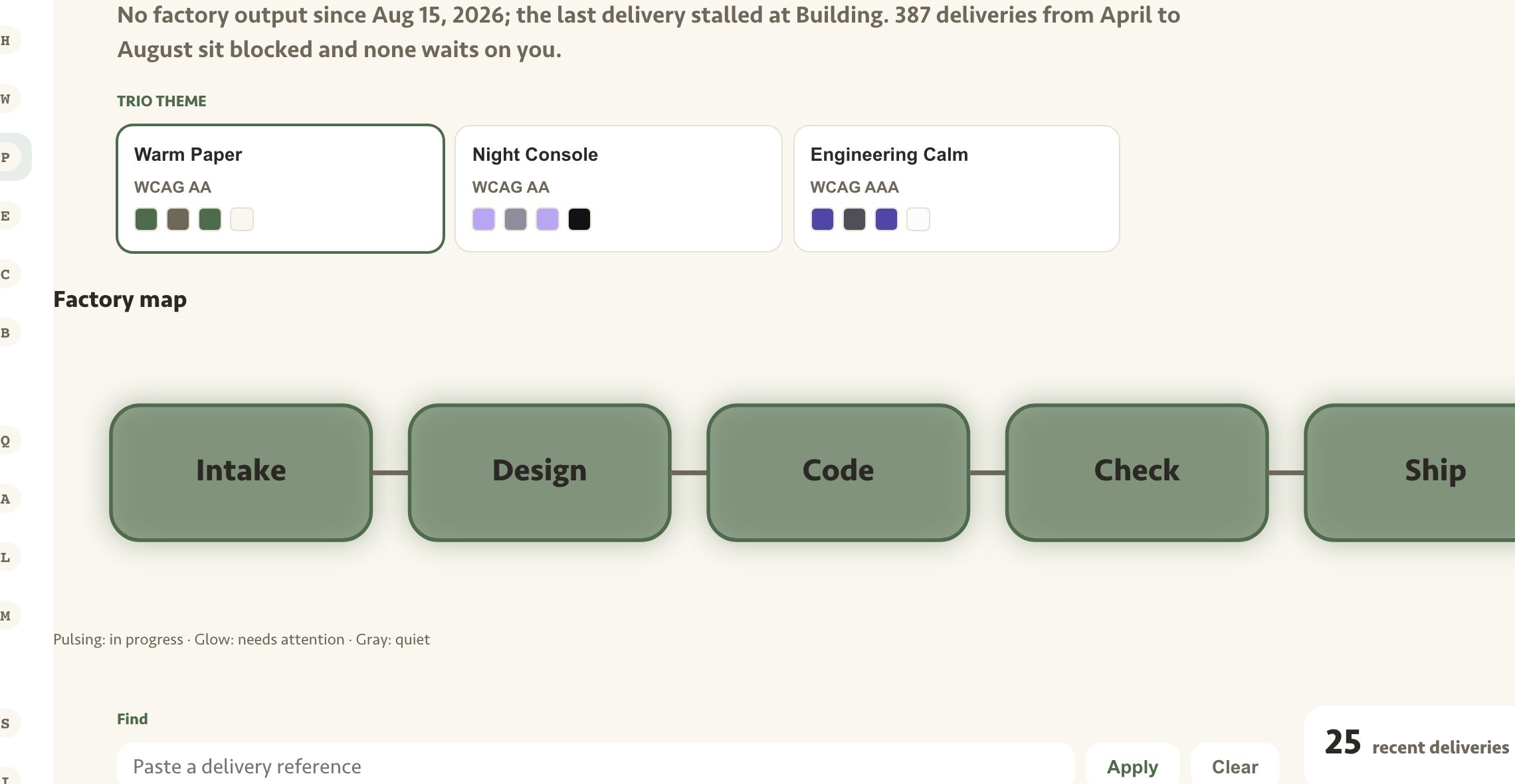
A declared design is compiled to screens in three complete looks the user can switch at runtime.
PARTIAL
The theme engine and library of looks run in production; two operator screens have been built entirely from declared design with every binding filled and accepted.
Who decides
Declared design oracles and, when taste is in play, the partner or Jack.
Build it
As designed
Code is written against real checks and repaired from the checker’s own diagnostics, not from self-critique.
PARTIAL
The code stage targets web, iPhone and Android, but each run is capped at one screen under the Edge time ceiling; there has not been a clean Hello World through the line.
Who decides
Typed checks and compile oracles; repair loops consume oracle output only.
Is it good?
As designed
Everything is typed, tested and run; when a check cannot decide quality, a person judges.
LIVE
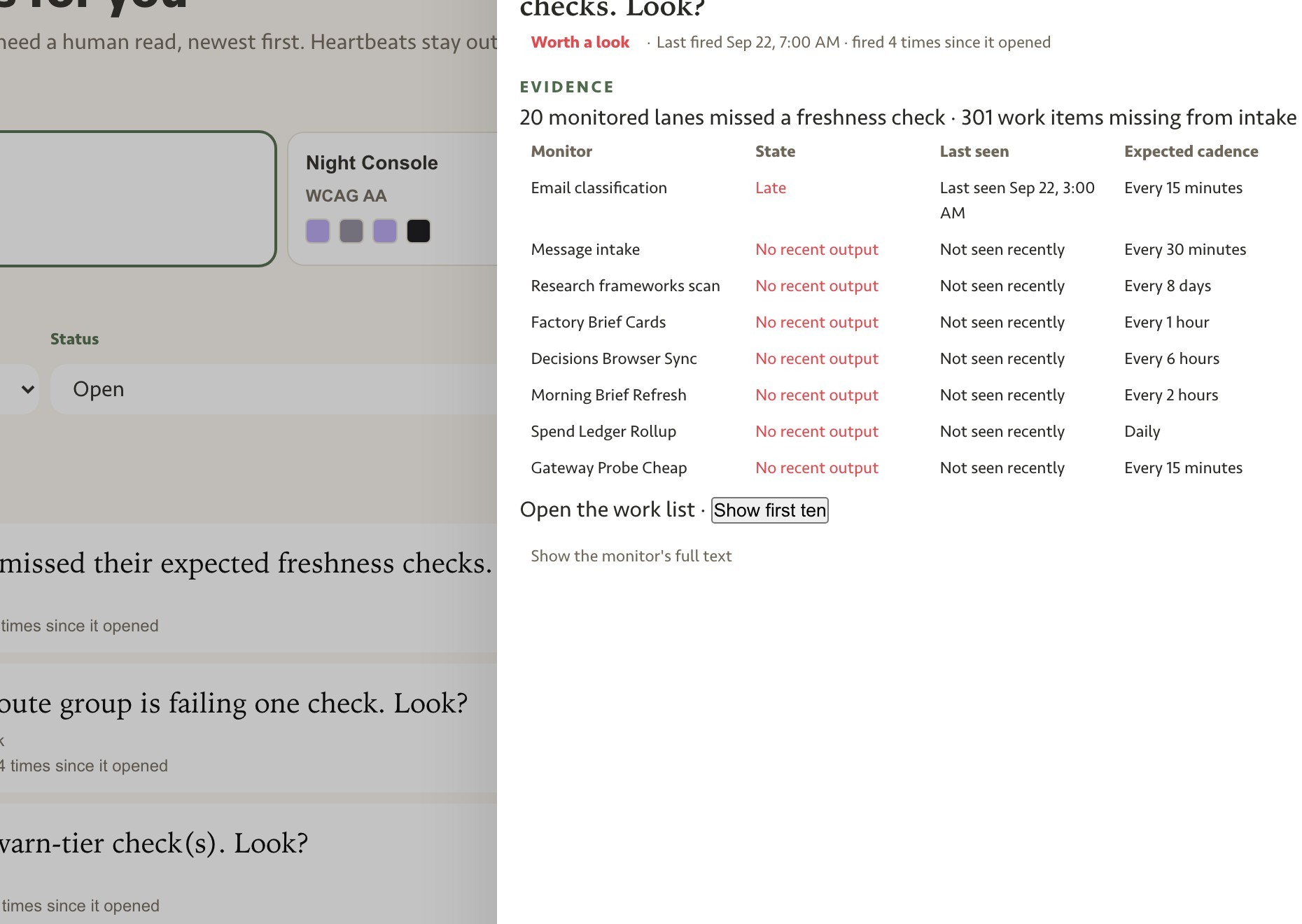
Deterministic oracles run first on every merge; operator alerts open a triage dossier that asks in plain language and lists parsed evidence; design review and markup gates are live; LLM judges stay advisory only.
Who decides
Oracles for what they can decide; Jack or the partner for the rest.
Ship it
As designed
Nothing reaches production except through a recorded promotion with what was checked and who approved it.
LIVE
Seven promotions shipped with receipts in the September pack; production state moves only through grant-locked doors.
Who decides
Promotion record and the person who owns the merge gate.
Keep it running
As designed
Health, spend and decisions stay visible; partner notes land in the same queue as our own work.
LIVE
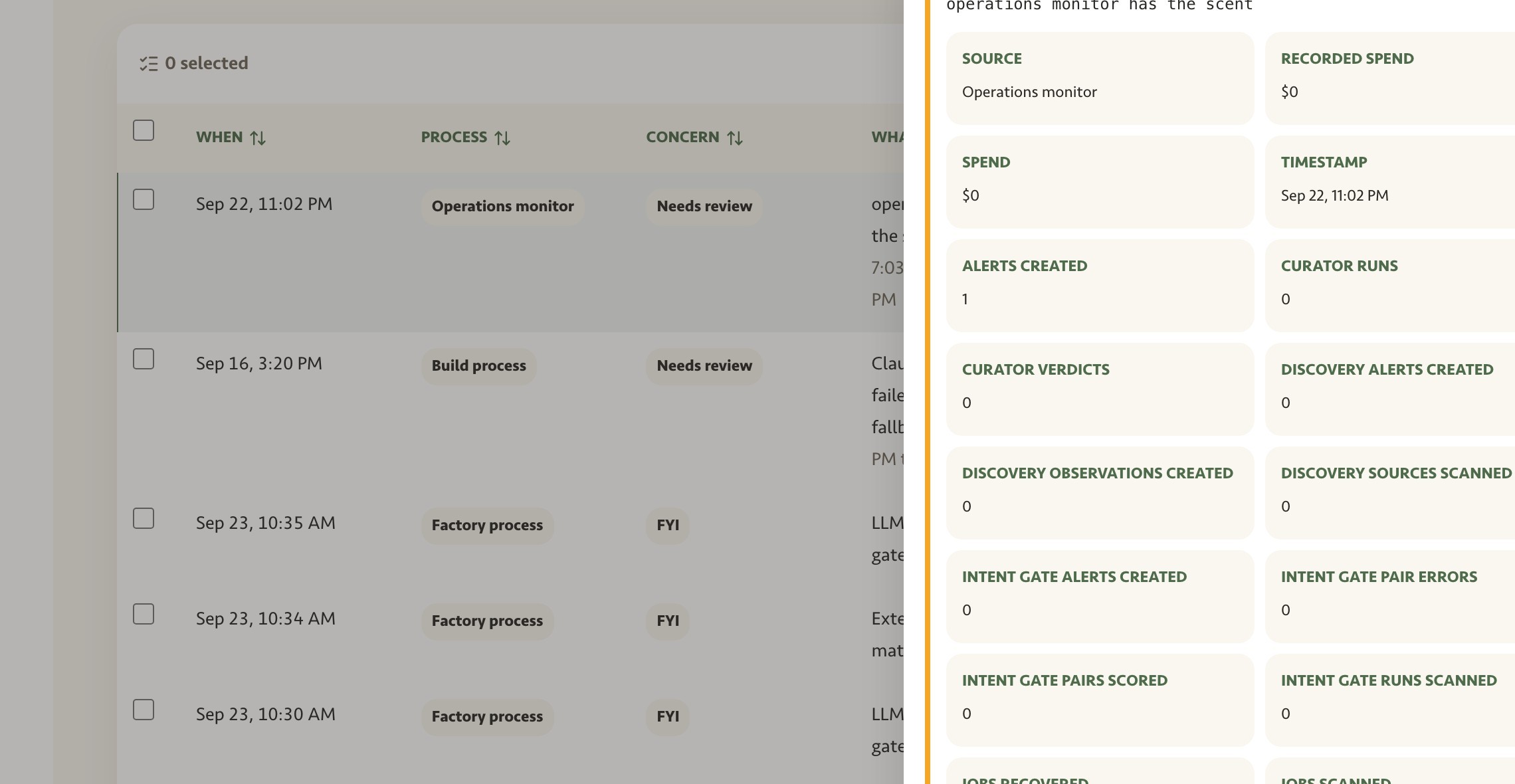
Podium Overview boards delivery velocity on production data; job activity logs group runs with a record drawer; the delivery map and eight-week volume chart read at a glance; partner notes still land in the work queue.
Who decides
Recorded goals and weekly review; Jack on spend and schedule.
Why the names
Nine named roles are a way to segment the agents and remember what each one owns — security, privacy, ethics, efficiency, deployment, and whether we should build at all.
As of 2026-09-23, they work behind the scenes; the name is the mnemonic for the responsibility.
- Cleo · stage 1Are we building the right thing?
- Val · stage 2Ethics, scope, and whether we should build anything at all.
- Dromeo · stage 3Give me a head start on how we want this to look.
- Ada · stage 4Code that survives real checks.
- Trully · stage 5Is this good enough to ship?
- Sun-sin · stage 6Deployment only when checks and promotion records say so.
- Tycho · stage 7What was decided, checked and promoted.
- Penny · stage 7Efficiency: health, spend, and oracles before judges.
- Wolfgang · stage conductingWho owns the line and the schedule.
Meet each role on the Designosaurs page.
Sections labelled as designed describe the plan; tags on “Today” lines say what is live, partial or in build on the record cited beside each line.